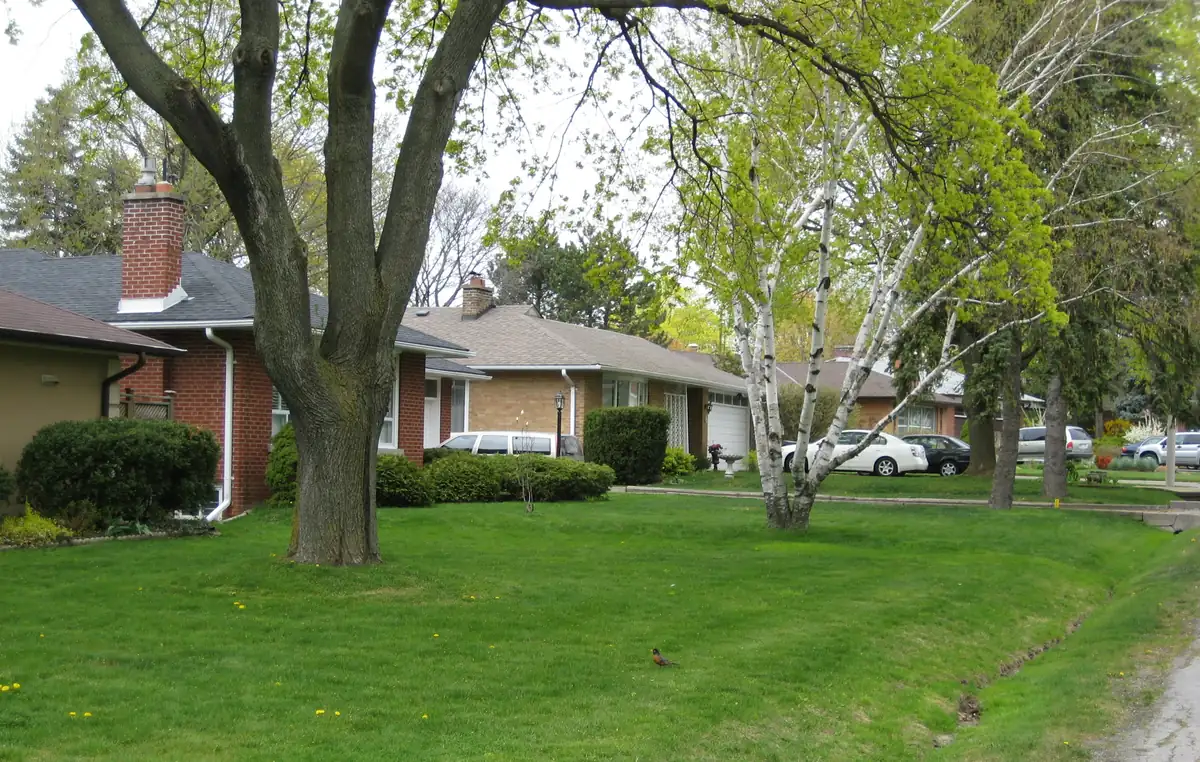
Photo: SimonP via Wikimedia Commons · CC BY-SA 3.0
October 26, 2026 · Khaled Khalil
Sell My House Etobicoke: Pricing, Costs & Strategy for 2026
If you're searching “sell my house Etobicoke,” the most important first step is to establish what your particular property is likely worth—not what the average GTA home sells for. The right selling strategy depends on your neighbourhood, property type, competing listings, condition and financial objectives.
In 2026, Etobicoke sellers need to be especially deliberate about pricing and negotiation. Buyers can compare available properties closely, and a strong offer involves more than the purchase price. The objective is to maximize your net proceeds while managing the risk of a delayed or unsuccessful closing.
Is 2026 a Good Time to Sell a House in Etobicoke?
Selling in 2026 can make sense, but the decision should depend on your property and plans rather than predictions about the overall market.
According to the Toronto Regional Real Estate Board's September 2026 report, the GTA recorded 5,040 home sales, down 9% from September 2025. The average selling price was $1,006,409, a year-over-year decline of 5.1%, while the MLS Home Price Index composite benchmark declined 4.7%.
Those figures suggest a more price-sensitive regional environment than a year earlier. However, they are GTA-wide statistics, not a valuation for an Etobicoke house.
A renovated detached home in a desirable residential pocket may face very different competition from a condominium near the waterfront or a property requiring major repairs.
The practical approach: Evaluate recent comparable sales, current inventory and your financial timeline before deciding whether to list.
How Much Is My House Worth in Etobicoke?
Your property's estimated market value should come from recent comparable transactions and active competition—not an automated estimate alone.
Etobicoke contains several distinct residential markets. Buyers considering a detached home in The Kingsway or Humber Valley Village may be looking for different features from those comparing townhomes and condominiums in Mimico or Humber Bay Shores.
Similarly, Long Branch, New Toronto, Alderwood, Islington-City Centre West and Markland Wood have different housing mixes, lot characteristics and competing inventory.
A proper comparative market analysis should consider:
- Recent sales of genuinely comparable properties.
- Detached, semi-detached, townhouse or condominium ownership.
- Above-grade living area, layout and usable space.
- Lot dimensions, parking and garage availability.
- Renovation quality and major system condition.
- Basement configuration and documented legal use.
- Active listings, terminated listings and price reductions.
- Expected buyer demand in the property's price bracket.
A nearby sale is not automatically the best comparable. The relevant question is which properties a prospective buyer would realistically consider as alternatives.
For a property-specific starting point, request a home valuation.
Should I Price My Etobicoke Home Above Market Value?
Pricing above supported market value can reduce early buyer interest, but intentionally underpricing every property is not the answer either.
The asking-price strategy should reflect buyer depth, recent sale-to-list outcomes, current competing inventory and your willingness to negotiate.
Some properties may justify an offer-date strategy. Others may be better served by a transparent asking price and negotiations as offers arrive.
Before choosing a price, establish a realistic expected sale range and a minimum acceptable net outcome. Then evaluate how each pricing approach might attract buyers.
A seller should also agree in advance on when to review showing activity, buyer feedback and competing listings. An extended listing period without a review process can lead to reactive price reductions.
Which Improvements Are Worth Making Before Selling?
Prioritize repairs and presentation improvements that remove buyer objections without creating disproportionate renovation costs.
Cleaning, decluttering, painting selected areas, repairing damaged finishes and improving landscaping can help buyers assess the home more clearly.
Major renovations require a more careful return-on-investment analysis. A new kitchen or bathroom may make sense in some circumstances, but the expected additional sale proceeds should be weighed against the construction cost, timing and risk.
For older Etobicoke houses, sellers should pay particular attention to roof condition, moisture issues, electrical and plumbing systems, and the documentation supporting renovations.
A buyer may discount the property for uncertainty as much as for a visible deficiency. Having receipts, permits and repair records available can help clarify what has been completed.
Professional photographs and accurate floor plans should explain the home's layout and features without misleading image manipulation.
What If My Property Has a Basement Apartment or Rental Suite?
A rentable or potentially rentable secondary unit can influence buyer interest, but the marketing must accurately describe its legal status.
An Etobicoke property with a separate entrance, kitchen or finished basement is not automatically an approved secondary suite.
The City of Toronto has zoning and building-permit requirements governing secondary suites. Depending on the property and previous work, buyers may investigate building records, fire and life-safety requirements, permits and outstanding orders.
Before advertising a property as having a legal apartment, verify the relevant documentation. If a tenant occupies the property, review the tenancy, lease terms and applicable Ontario Residential Tenancies Act requirements before promising vacant possession.
For some buyers, documented rental potential is an important financial benefit. Unsupported income or legality claims, however, can introduce substantial transaction risk.
How Much Does It Cost to Sell a House in Etobicoke?
Your net proceeds are the sale price less mortgage obligations, selling expenses, adjustments and other applicable costs.
Typical expense categories include real estate remuneration and applicable HST, legal fees, mortgage discharge costs or penalties, repairs, preparation expenses and moving costs.
Commission is negotiable and depends on the agreement with the brokerage. There is no universal commission rate that applies to every Etobicoke sale.
Before listing, calculate the approximate result under several potential sale prices.
| Illustrative seller net sheet | Amount |
|---|---|
| Hypothetical sale price | $1,200,000 |
| Mortgage payout | ($500,000) |
| Assumed commission and applicable HST | ($54,240) |
| Legal, preparation and moving allowance | ($8,000) |
| Estimated proceeds before other adjustments | $637,760 |
Illustration only: assumes a negotiated 4% commission plus 13% HST, not a standard or recommended commission rate. Actual costs, penalties, tax consequences, adjustments and contractual arrangements will differ.
For sellers moving to another property, the calculation should include the required purchase deposit, mortgage qualification and closing-date coordination.
Should I Sell Before Buying My Next Home?
Selling first generally reduces uncertainty about the money available for your next purchase. Buying first can secure the desired property but may create financing and carrying-cost exposure.
The best sequence depends on your mortgage capacity, cash reserves, current property's saleability and the competitiveness of your intended purchase market.
This is especially relevant for Etobicoke homeowners moving to another part of Toronto, farther west into the GTA or toward Waterloo Region.
Where two transactions depend on each other, consider financing contingencies, closing dates, bridge financing availability and alternative accommodation before making commitments.
Do not assume the existing home will achieve your preferred selling price by a specific date.
If your next move is to Waterloo Region, our guide to selling a home in Kitchener-Waterloo explains how pricing and preparation work in that market.
How Should I Compare Offers on My Etobicoke Home?
Evaluate each offer as a combination of price, deposit, conditions, closing date and probability of completion.
An offer with the highest price is not necessarily the strongest offer. Financing and inspection conditions, a sale-of-property condition or an unsuitable closing date can change the transaction's risk.
A useful offer comparison considers the buyer's proposed deposit, the scope and deadlines of conditions, inclusions and exclusions, closing flexibility and any additional contractual obligations.
Under Ontario's rules, sellers have choices about how to deal with competing offers. RECO explains that sharing offer content requires the seller's written direction, and personal or identifying information cannot be shared.
Have the offers reviewed carefully before accepting or signing a counteroffer. Once an agreement is accepted and binding, negotiating leverage and available options may change substantially.
How Do I Choose a Real Estate Agent to Sell in Etobicoke?
Choose representation based on the quality of the pricing analysis, transaction strategy, marketing plan and negotiation process—not simply the highest proposed asking price.
Ask prospective agents to explain which sales they would use as comparables and why. They should also identify direct competitors, the likely buyer profile, preparation priorities and how they would respond if the property did not attract the expected activity.
Ask what services and fees are included and how communication and offers will be handled.
The Real Estate Council of Ontario recommends interviewing multiple agents, reviewing services and fees, checking references and verifying registration.
For more information on Khaled Khalil's broader service area, visit the GTA real estate page.
What Is the Best First Step to Sell My House in Etobicoke?
Start with a property-specific valuation and an estimated net proceeds calculation, then build the selling strategy around your timeline.
The sequence is straightforward: evaluate comparable sales, review active competition, confirm property documents, decide which improvements are economically justified and select a pricing and marketing approach.
The strongest strategy is the one that attracts qualified buyers while protecting the seller's financial and contractual position.
Considering selling your Etobicoke home? Request a market-informed home valuation from Khaled Khalil to review your property's competitive position and potential next steps.
Market data reflect information available as of October 26, 2026. This article provides general real estate information, not legal, tax or financial advice.
Sources & Further Reading
Related Insights
- Relocating to Waterloo Region: Where to Live and What to Know Before BuyingResidential Real Estate · October 12, 2026
- Commercial Leasing Agent Mississauga: What Landlords and Tenants Should Know Before SigningCommercial Real Estate · October 19, 2026
- Waterloo Region Real Estate Market October 2026: What Buyers and Sellers Should KnowMarket Insights · October 5, 2026
Stay in the loop
Be the first to know when I publish new Ontario market insights and analysis.
No spam. Unsubscribe anytime.
Khaled Khalil
REALTOR® · Sales Representative · Century 21 Heritage House Ltd., Brokerage
647-930-7154 · deals@khaledkhalil.ca